I did not set out to study Fr. Louis Antoine de Poirot S.J. (1734–1813).
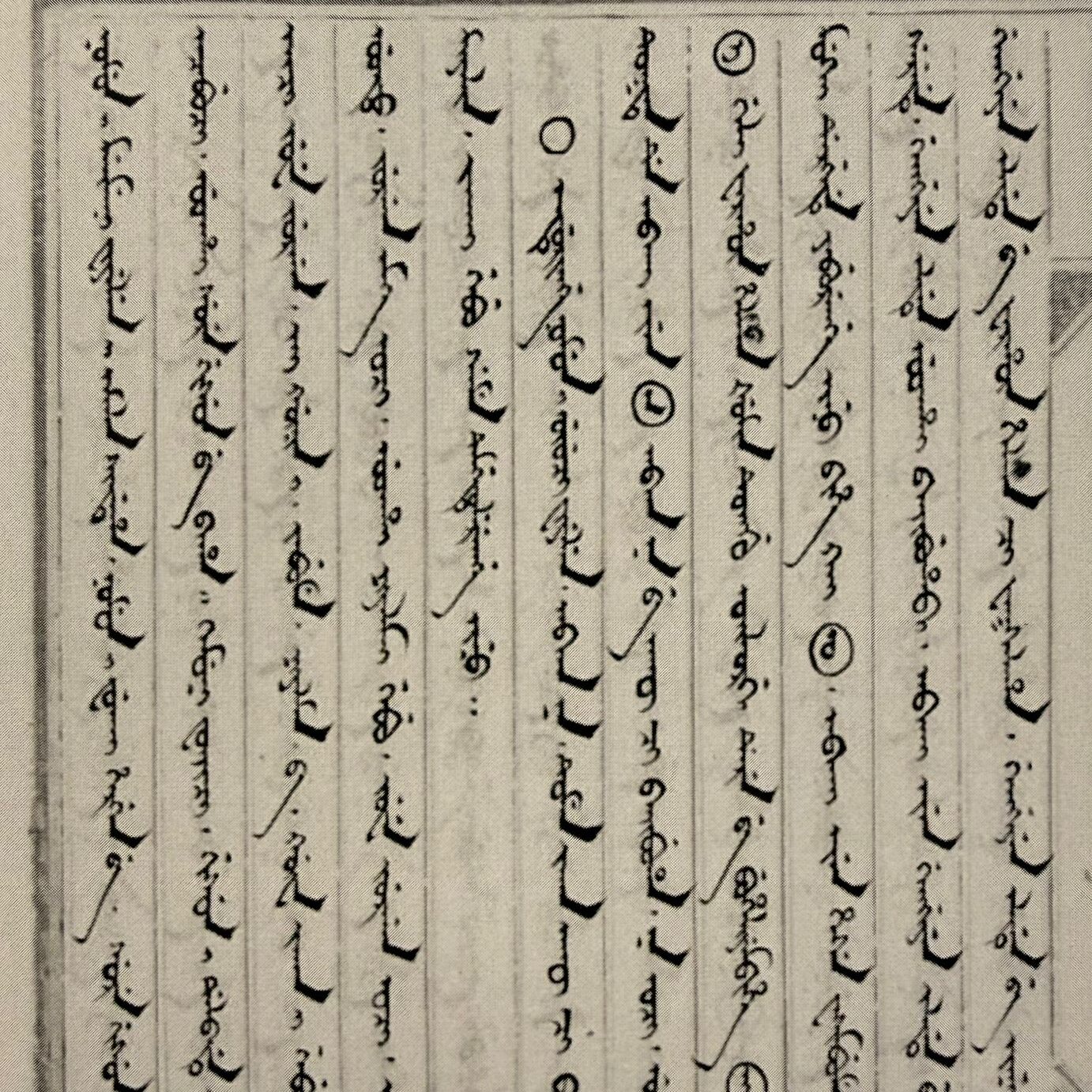
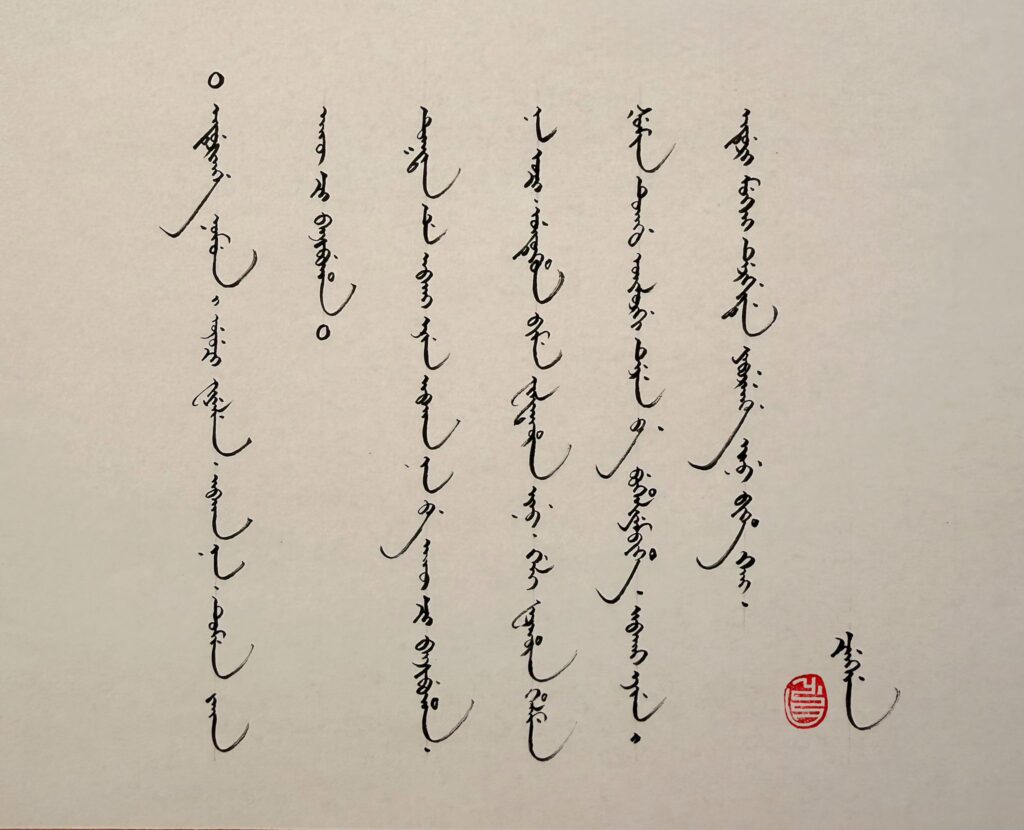
As a historian, my primary interest lies in Manchu studies. When I first encountered Poirot, it was almost by accident. At the time, I was searching for Manchu-language sources, and one of the few materials available to me was an eighteenth-century translation of the Bible into Manchu. This immediately caught my attention. Manchu occupied a distinctive place within Qing political culture, serving not only as a language of administration and court communication but also as an important marker of imperial identity. A Christian text translated into such a language raised questions that were historical, linguistic, and political all at once. Following those questions first led me to its translator, Louis Antoine de Poirot, a French Jesuit missionary who spent most of his life in Qing China. Yet Poirot himself was not initially my primary focus. I was interested in the translation: its vocabulary, its style, and the choices involved in rendering biblical concepts into Manchu. Like many historians, I began with the text.
Yet the text soon led me elsewhere. When I turned to Poirot’s surviving correspondence, I expected to find discussions of translation techniques, linguistic difficulties, or theological terminology. Instead, I found something quite different. His letters were filled with disputes over governance. They spoke of conflicts between missionaries, debates over church leadership, tensions between Rome and European governments, concerns about mission property, and anxieties about the future of Christianity in China.Again and again, questions of authority emerged through these disputes. At first, I wondered what all of this had to do with a Bible translation.
The world in which Poirot undertook his translation was, in many ways, an unlikely one for such a project. Earlier in the eighteenth century, the Chinese Rites Controversy had strained relations between the Catholic Church and the Qing court. In 1724, the Yongzheng Emperor formally prohibited missionary activities, and religion thereafter existed under increasing restriction and periodic persecution. These tensions culminated in the Great Persecution of 1784–1785, when arrests, expulsions, and investigations placed many Christians under severe pressure, while missionary activity and the circulation of Christian texts became increasingly subject to surveillance and regulation. At the same time, within the Catholic Church, biblical translation was not simply a matter of personal initiative. Translation into local languages was closely supervised and often required ecclesiastical approval.
Under precisely these circumstances, Poirot devoted decades of his life to translating and commenting upon the Bible in both Manchu and vernacular Chinese. The question became difficult to ignore: why undertake such an ambitious translation project at a moment when both the Qing state and the Catholic Church imposed significant constraints upon it?
Pursuing that question gradually led me beyond translation itself and toward a larger historical crisis. In 1773, the Society of Jesus was canonically suppressed. The religious order that had shaped Poirot’s identity, education, and missionary vocation ceased to exist as a legal institution. Across the globe, Jesuits suddenly found themselves navigating an uncertain future. What struck me was that the practices through which Catholic life was governed did not simply disappear with the suppression. Missionaries continued to preach, communities continued to worship, letters continued to circulate, disputes continued to be debated, and in Beijing, Poirot continued to translate Scripture. The structures had changed, but the work continued.
Somewhere along the way, the translation itself ceased to be my primary question. Instead, I became interested in how the transformation of Catholic governance was experienced and negotiated after the suppression of the Society of Jesus. Through the case of Poirot, I began to see that authority was not exercised only through institutions or official offices. It was also enacted through translation, interpretation, correspondence, teaching, and the countless practices through which faith was lived and transmitted. After 1773, the framework of Catholic governance neither vanished nor remained unchanged. It survived in new forms.
Reading these materials, I found myself returning repeatedly to a question that extends beyond eighteenth-century China: what happens to faith when the structures that once sustained it become uncertain?
The question is hardly unique to Poirot’s world. Christian communities throughout history have found themselves navigating changing political circumstances, shifting social realities, and periods in which familiar institutions appeared fragile or inadequate. Neither the suppression of the Society of Jesus nor legal restrictions on Christianity brought Christian life in China to an end.The letters are filled with disagreements about authority, jurisdiction, and governance, precisely because these things mattered deeply. Yet they also reveal missionaries continuing to preach, teach, translate, and care for Christian communities. Through these sources, a broader story gradually emerged: how Christians sought to remain faithful amid uncertainty. Not by ignoring institutions, nor by withdrawing from the world, but by continuing the ordinary work through which faith is practiced and handed on.
Perhaps that is why this story still feels relevant today. The situation of today’s Christians may be very different from that of eighteenth-century Beijing. Yet the question remains familiar: how do Christians remain faithful when the structures around them are changing? I do not think the sources offer a simple answer. But they do suggest that faith has often endured not because uncertainty disappeared, but because believers continued to live it within uncertainty itself.