
Doing Theology from Many Centers
What does it mean to do theology as a person of mixed linguistic, cultural, and geographic heritage who honors both tradition and context?
Engage theological scholarship and reflection arising from Chinese Christian contexts, exploring Scripture, doctrine, church traditions, and questions facing the wider church.
What does it mean to do theology as a person of mixed linguistic, cultural, and geographic heritage who honors both tradition and context?

This congress gave prominence to many important themes and concepts, including the kingdom of God, holistic mission, the cultural mandate, new creation, and polycentric mission.

This post aims to provide a careful explanation of the term “Sinophone” and why it is important for genuine engagement with plurality.

If unity is indeed the key to world evangelization, then the hard work of reconciliation will be required to get there.

The gathering brought not only an enormous amount of content, but also an unusually high level of personal connection—from reuniting with friends I had not seen for years to meeting new ministry partners.

Learning to receive one another amid our differences while holding fast to truth may be a discipline the entire Chinese church must continue to practice.

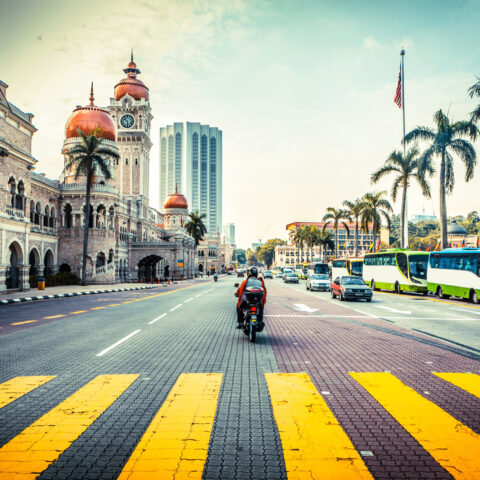
In mid-July 2026, Chinese Christian scholars and pastors from various denominational backgrounds in the United States, the United Kingdom, China, South Korea, Singapore, Malaysia, Taiwan, and Hong Kong gathered in Kuala Lumpur, Malaysia, for the three-day Third Public Theology Conference.

What was most noteworthy about this congress was not only what it said, but also how it was experimenting with new ways to speak, lead, communicate, and understand the next generation.

After leaving Kuala Lumpur, one question stayed with me: were we, throughout the conference, actually speaking about the same thing when we used the term ‘public theology’?
Does the gospel of Christ also concern a nation's public life: justice, poverty, corruption, the environment, refugees, and people suffering in disasters? I believe the answer is yes.

The public witness of the church is not to win political power or cultural hegemony in this “competition of gods.” Rather, it is to imitate Christ, seeking the peace of the city in exile, living out embodied love in the virtual, and witnessing to the eternal kingdom in suffering.

Like all theology, public theology begins not with issues, but with the knowledge of God.