At a disaster-relief site, the first question before us is usually not, “Is this person a Christian?” but, “Is this a person who is suffering?”
If someone is hungry, we give that person food. If someone has lost a home, we help rebuild it. If disaster has left someone in despair, we stay alongside that person. The “neighbor” Jesus spoke of has never been limited by religion, ethnicity, or nationality.
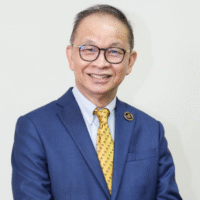
Over the years, I have had the privilege of serving with the Chinese Annual Conference of The Methodist Church in Malaysia and Methodist Crisis Relief & Development (MCRD). I have also served as Board Chair of World Vision Malaysia. Through these experiences, I have participated in disaster relief and humanitarian work in Malaysia and elsewhere in Asia, and I have seen how the church responded to the needs of different communities during the COVID-19 pandemic. Again and again, these experiences have compelled me to ask: How should the Christian faith enter the real world?
Our faith certainly concerns personal salvation and the growth of the church. But does the gospel of Christ also concern a nation’s public life: justice, poverty, corruption, the environment, refugees, and people suffering in disasters? I believe the answer is yes.
Compassion Is Not a Tool for Evangelism
In Malaysia, many refugees, asylum seekers, and stateless people still lack comprehensive legal protection and face serious barriers to education, health care, and employment. I am grateful that many churches and Christians have quietly walked alongside them over the years, providing education, humanitarian assistance, and practical support.1
Yet this ministry also compels us to ask more deeply: Why do we help them? Do we care for a person only because we hope that one day they will become a Christian? Or do we help because we believe that every person is created in the image of God and that every human life therefore possesses a dignity bestowed by God?
For me, caring for those who suffer is not a tool to be used before evangelism, nor is it a means of securing a religious outcome. We serve someone because the gospel first enables us to see that person as our neighbor and as someone loved by God. Even when we see no “result,” and even if that person never joins a church, their dignity still deserves our respect, and their suffering still calls for our response.
Public Engagement Does Not Mean Partisanship
Recent democratic developments and the growth of civil society in Malaysia continue to remind Christians that faith shapes not only private morality, but also how we participate in our nation’s common life. Every election reminds us that citizens bear responsibility for the direction of society. And when society faces corruption, abuse of power, inequality, environmental pollution, and other forms of injustice, the church must seriously consider where it should stand.
The prophet Micah says, “He has told you, O man, what is good; and what does the LORD require of you but to do justice, and to love kindness, and to walk humbly with your God?” (Micah 6:8). Public engagement, therefore, is not something outside the faith. Doing justice and loving kindness are integral to faith itself.
Of course, public engagement does not mean that the church should become an appendage of any political party, nor does it mean that all Christians must take the same position on every political issue. The church’s responsibility is not to endorse a political camp, but to bear faithful witness within a complex society to justice, mercy, integrity, and human dignity.
Business Is Also a Public Arena for Faith
Public theology is not confined to elections, policy debates, or charitable organizations. For a Christian who has worked in business for many years, public theology is present every day in the decisions a company makes about how it treats employees, suppliers, customers, communities, and the environment.
Business values efficiency, growth, and returns. All three have their place. But when efficiency becomes the only measure, those most likely to be sacrificed are often those without the power to speak for themselves. Businesses can create jobs and social value, but they can also pass their costs on to workers, communities, or future generations. Profit and faith are not necessarily in conflict. Yet when profit conflicts with integrity, justice, or human dignity, the choices we make publicly reveal the kind of God we believe in.
Christian business leaders, therefore, cannot leave their faith behind on Sunday. How we exercise power, how we treat those with less power, how we maintain integrity amid competition, and how we take responsibility for society and the environment—these may appear to be questions of business management, but they are also forms of public Christian witness.
A Theology That Grows from Malaysian Soil
This is precisely why we need to take more seriously the work of developing a locally rooted Christian public theology. Public theology in Malaysia cannot simply be a translation of Western theological theories; it must grow from the history, culture, and lived realities of this land.
It must face the tensions among religions and ethnic communities, questions of corruption and power, the gap between rich and poor, and environmental destruction. It must also see refugees, migrant workers, stateless people, and those in society whose voices have long gone unheard. Such a theology does more than help the church speak about social issues. It helps the church learn how, on this land, to become a church that truly belongs to this land.
We need a theology that helps the church understand that engaging society is not work outside the gospel; that caring for people who suffer is not a tool used before evangelism; and that pursuing justice is not merely a social activity in which the church occasionally takes part. All of this should flow from our understanding of the incarnation.
The Public Witness of the Incarnation
“The Word became flesh and dwelt among us” (John 1:14). God did not remain at a distance from human suffering. He entered human history, took on a human body, entered human pain, and became one of us.
The church, then, cannot merely comment on the world from a distance. If our theology remains confined within church walls and fails to see society’s pain; if our spirituality is concerned only with the individual while ignoring the dignity and lives of others; if our mission cares only about whether a person eventually becomes a Christian without truly caring about what that person is enduring, then perhaps we have not yet fully lived out the meaning of the incarnation.
True public theology allows faith to become a visible witness in public life. When society faces injustice, the church may at times need to speak, at times to stand alongside victims, and at times to establish long-term services and institutions. When disaster strikes, the church does more than express concern; it is willing to act. When refugees and stateless people are overlooked, the church is willing to welcome them. When the environment is damaged, the church is willing to assume its responsibility as a steward. When society is torn apart, the church learns to become a community of peace and reconciliation.
This is not about allowing the church to be absorbed by the world’s agenda, but about the church remaining faithful to the Christ who entered the world. Public witness is not about proving ourselves right by speaking more loudly. It is about allowing people to see, in concrete relationships, institutions, and choices, another way of life shaped by the gospel.
The Church Exists in and for the World
The Book of Discipline of the Methodist Church in Malaysia states: “The church of Jesus Christ exists in and for the world.”2
This does not mean that the church should be absorbed by the world’s agenda. Rather, because the incarnate Lord entered human history and human suffering, the church, as the body of Christ, cannot remain at a distance from the world.
May our theology not be confined to books, and may our faith not remain inside church walls. May people see the Christ in whom we believe in the way we accompany people amid disaster, welcome the vulnerable, practice integrity in business, and pursue justice and peace.
The Word became flesh and dwelt among us. Today, the church too is called to enter the world and dwell among its people.
This article was originally written in Chinese and has been translated into English for publication by ChinaSource.
- United Nations High Commissioner for Refugees, “Malaysia,” UNHCR, accessed July 15, 2026, https://www.unhcr.org/where-we-work/countries/malaysia; United Nations High Commissioner for Refugees, “Stateless People,” UNHCR Malaysia, accessed July 15, 2026, https://www.unhcr.org/my/about-unhcr/who-we-protect/stateless-people.
- The Methods Church in Malaysia, The Book of Discipline 2016, paragraph 102.